Why are more and more brands choosing cardboard display?
Custom cardboard display trends are rapidly reshaping how brands present products, and custom cardboard display trends are becoming a strategic choice rather than a temporary solution. As trade shows and retail environments evolve, more brands—especially in the electronics sector—are turning to cardboard displays to balance sustainability, cost control, and visual impact. This shift reflects deeper changes in brand marketing, procurement strategy, and environmental responsibility across global B2B markets.
The Evolution of Cardboard Displays in Modern Retail and Trade Shows
Cardboard displays were once viewed as short-term promotional tools. Today, they are engineered retail fixtures developed through advanced structural design and material processing. Modern cardboard display systems use reinforced corrugated paper, honeycomb structures, and hybrid back panels to achieve higher load capacity and longer service life.
In the electronics industry, where product updates are frequent and trade show schedules are tight, display flexibility has become essential. Brands no longer want fixed metal fixtures that require high upfront investment and long lead times. Instead, cardboard solutions offer fast customization, lightweight logistics, and design freedom that aligns with rapid product cycles.
This industry shift has directly influenced custom cardboard display trends for trade shows, where brands demand modularity, easy installation, and visual storytelling within limited booth space.
Product Structure and Technical Parameters
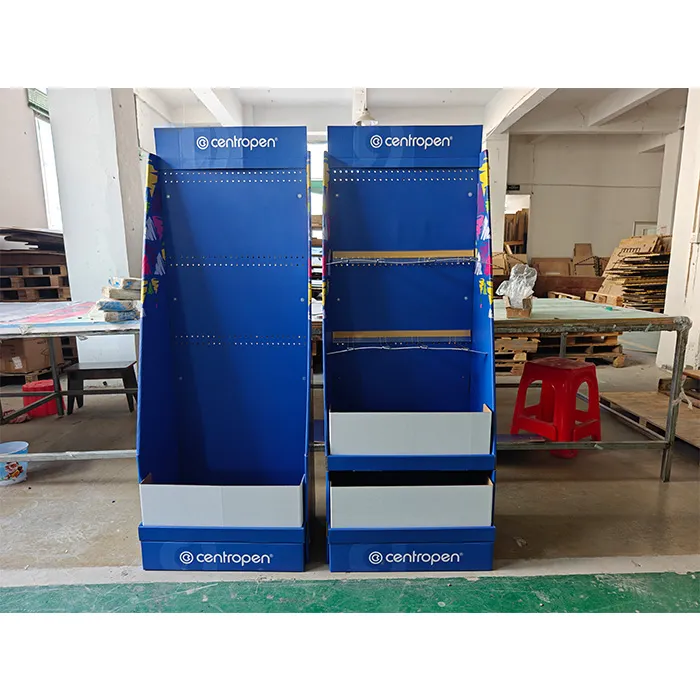
Modern custom cardboard displays are not generic racks. They are designed as integrated systems, often combining a cardboard structure with functional components such as MDF backing panels and metal or plastic accessories.
Key technical characteristics include:
| Feature | Description |
|---|---|
| Structural Material | High-density corrugated cardboard with reinforced layers |
| Backing Options | MDF or laminated paperboard for added stability |
| Hook System | Adjustable hooks for flexible product arrangement |
| Surface Finish | Offset printing, UV coating, or matte lamination |
| Assembly | Tool-free or minimal-tool setup |
The use of custom cardboard display with adjustable hooks is particularly valuable for electronics brands. Accessories such as cables, chargers, and small devices can be rearranged quickly without redesigning the entire display, improving both merchandising efficiency and staff workflow during exhibitions.
Why Sustainability Is Driving Display Decisions
One of the strongest forces behind sustainable custom cardboard display trends is the growing emphasis on environmental responsibility. Electronics brands face increasing scrutiny from distributors, retailers, and end consumers regarding packaging waste and carbon footprint.
Cardboard displays are produced from recyclable raw materials and can be reintegrated into recycling systems after use. Compared with metal or plastic fixtures, they reduce transportation emissions due to lower weight and often require less energy during manufacturing.
From a B2B perspective, sustainability is no longer just a marketing claim. Retail partners increasingly evaluate suppliers based on ESG-related criteria, making cardboard displays a practical tool to support compliance and brand positioning.
Application Scenarios for Electronics Brands
Electronics brands operate across multiple sales channels, and cardboard displays adapt well to diverse environments:
Trade shows and exhibitions for new product launches
Pop-up retail campaigns and seasonal promotions
Distributor showrooms and wholesale display areas
Retail chains testing new product layouts
The flexibility of custom cardboard display trends 2026 reflects the need for displays that can evolve with product portfolios. Instead of replacing entire fixtures, brands can update graphics, hook configurations, or shelf layouts while retaining the core structure.
Comparative Advantages Over Traditional Fixtures
For procurement teams and marketing managers, cardboard displays offer several strategic advantages:
Faster customization cycles aligned with product launches
Lower storage and transportation burden
Easier deployment across multiple locations
Consistent brand visuals across regions
These advantages are particularly attractive to large retailers and wholesalers who manage bulk orders for multiple outlets. At the same time, emerging brands and independent electronics retailers benefit from reduced risk and scalable investment.
Quality Assurance and Manufacturing Capability
High-quality cardboard displays depend on standardized production processes rather than manual assembly. Professional manufacturers implement material testing, structural simulation, and load-bearing verification before mass production.
Key quality control steps include:
Raw material strength testing
Structural stability evaluation
Print durability inspection
Assembly safety checks
These processes ensure that cardboard displays perform reliably throughout trade shows and retail campaigns, supporting brand credibility in front of buyers and partners.
OEM Customization and Flexible Cooperation
OEM service plays a critical role in meeting diverse branding needs. Customization can include structure size, hook configuration, surface printing, and packaging format. Flexible MOQ policies allow both large-scale retailers and startup brands to access tailored solutions without excessive inventory pressure.
For electronics brands expanding into new markets, this flexibility supports faster market entry and localized merchandising strategies.
After-Sales Support and Practical FAQs
Is cardboard durable enough for electronics products?
With proper structural design and reinforced materials, cardboard displays can safely support packaged electronics and accessories in retail and exhibition settings.
Can displays be reused?
Many cardboard displays are designed for multiple uses, especially when stored properly between campaigns.
Is customization limited compared to metal displays?
On the contrary, cardboard offers broader graphic and structural customization options with shorter lead times.
Looking Ahead: The Strategic Role of Cardboard Displays
As retail and exhibition environments continue to prioritize flexibility, sustainability, and speed, cardboard displays are evolving from tactical tools into strategic assets. The rise of custom cardboard display trends reflects how brands rethink physical presentation as part of long-term brand management rather than short-term promotion.
For electronics brands seeking efficient, responsible, and visually consistent display solutions, cardboard is no longer an alternative—it is becoming the standard. By aligning design, sustainability, and operational efficiency, modern cardboard displays help brands stand out while meeting the practical demands of today’s B2B retail landscape.