How Many Garments Can a Retail Clothing Rack Hold? A Practical Guide for Fashion Retailers
How Many Garments Can a Retail Clothing Rack Hold? Understanding Capacity from a Retail Perspective
How many garments can a retail clothing rack hold is one of the most common and practical questions asked by fashion retailers when planning store layouts, visual merchandising, and inventory flow. For boutiques and apparel chains alike, the real value of a clothing display rack is not just how it looks, but how efficiently it supports daily sales, restocking, and customer browsing without compromising stability or aesthetics.
Modern clothing store display racks are engineered to balance weight capacity, hanger spacing, fabric protection, and customer accessibility. At ArriTec, retail garment racks are designed specifically for B2B clients such as fashion boutiques, apparel chains, and independent brand stores that require durable, scalable, and customizable display solutions.
Retail Clothing Rack Evolution: From Simple Rails to Engineered Display Systems
The retail clothing rack has evolved significantly over the years. Early garment rails focused solely on hanging capacity, while modern display stand systems integrate shelving, modular frames, branding panels, and material optimization.
Today’s racks are commonly manufactured using reinforced steel tubing, precision welding, and surface treatments such as powder coating or chrome plating. These production improvements directly impact how many garments a rack can realistically hold without bending, wobbling, or losing visual appeal.
For fashion retailers, especially boutiques with limited floor space, every floor standing clothing rack must support both density and presentation quality.
Key Factors That Determine Garment Capacity on a Clothing Display Rack
Rather than focusing on a fixed number, professional retailers evaluate capacity based on multiple structural and operational factors.
1. Rack Structure and Frame Design
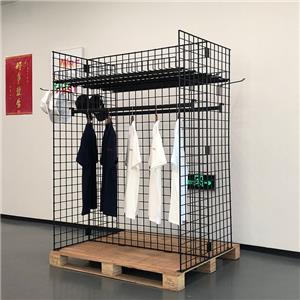
A single-rail display stand distributes weight differently than a double-rail or rectangular frame. Wider base frames increase stability, allowing the rack to hold heavier garments such as coats or denim.
2. Material Thickness and Load Engineering
Steel thickness, joint reinforcement, and welding quality all influence load performance. Commercial-grade clothing display racks for boutiques are designed for continuous daily use, not short-term promotional displays.
3. Garment Type and Fabric Weight
Lightweight tops allow higher density, while jackets, suits, or layered garments require more spacing to avoid wrinkling and overcrowding.
| Garment Type | Display Consideration |
|---|---|
| T-shirts & blouses | Higher density possible |
| Dresses | Require vertical clearance |
| Jackets & coats | Lower density, higher weight |
| Denim & knitwear | Balanced spacing recommended |
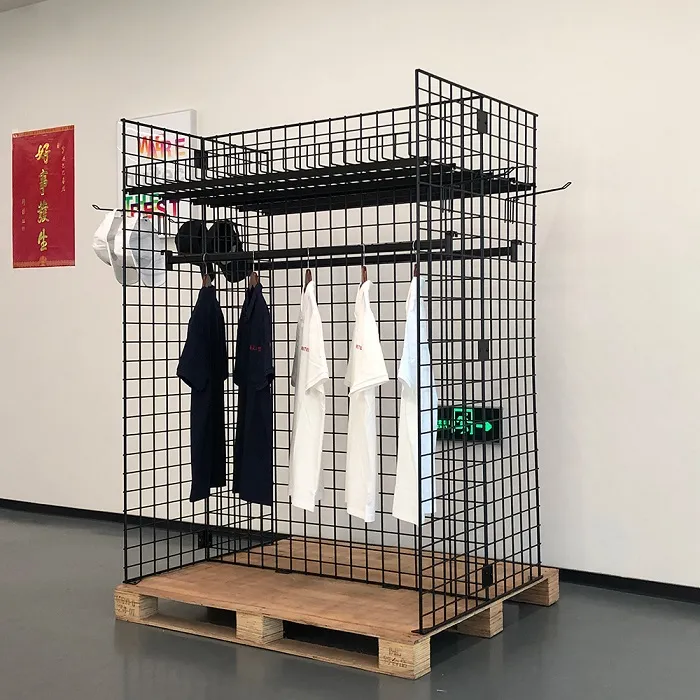
Why Floor Standing Clothing Racks Are Preferred by Boutiques
For independent fashion stores and lifestyle boutiques, floor standing clothing racks offer unmatched flexibility. They can be repositioned easily for seasonal collections, promotions, or new arrivals without fixed installation.
Unlike wall-mounted systems, floor racks allow customers to walk around the display stand, improving engagement and dwell time. This layout approach is particularly effective in boutique environments where storytelling and styling are part of the brand experience.
Clothing Rack with Shelf: Combining Hanging and Folded Displays
A clothing rack with shelf adds another layer of merchandising efficiency. Shelves allow retailers to display folded garments, accessories, shoes, or bags while keeping hanging items at eye level.
This hybrid structure increases total product exposure per square meter without overloading the hanging rail. From a visual merchandising standpoint, it also creates hierarchy and balance within the display rack.
Retailers often use shelf-integrated racks to:
Showcase coordinated outfits
Separate new arrivals from basics
Highlight premium collections
How Retailers Optimize Capacity Without Overcrowding
Professional apparel retailers rarely aim to maximize garment count at the expense of presentation. Instead, they focus on effective capacity, ensuring customers can browse comfortably.
Best practices include:
Maintaining consistent hanger spacing
Leaving visual breathing room between collections
Adjusting density based on season and fabric weight
Rotating stock frequently instead of overloading racks
A well-balanced clothing store display rack supports sales flow while protecting garments from damage.
Customization Options for B2B Clothing Display Racks
Customization is essential for retailers who want their display stand to align with brand identity and store layout. ArriTec provides OEM services tailored to B2B clients, including fashion chains and boutique brands.
Common customization options include:
Rack height and width adjustments
Shelf quantity and positioning
Finish colors and textures
Logo plates or branding panels
MOQ is flexible, allowing retailers to test designs or scale production based on expansion plans.
Quality Assurance and Manufacturing Expertise
Every clothing display rack is produced under strict quality control standards. Material sourcing, welding inspection, load testing, and surface treatment checks ensure long-term durability in high-traffic retail environments.
ArriTec’s manufacturing capacity supports both small boutique orders and large-scale chain store rollouts, ensuring consistency across multiple locations.
After-Sales Support for Retail Partners
Beyond production, professional support is a key part of long-term cooperation. Retail partners benefit from:
Pre-production consultation
Structural optimization advice
Packaging solutions for international shipping
Ongoing technical support
This service-driven approach helps retailers reduce setup issues and improve store efficiency.
FAQ: Retail Clothing Rack Capacity Explained
Q1: Is there a standard number of garments a rack can hold?
Capacity depends on rack structure, garment type, and spacing strategy rather than a fixed number.
Q2: Can racks be customized for heavy garments?
Yes. Reinforced frames and thicker materials can be specified for heavier apparel.
Q3: Are these racks suitable for boutique stores?
Absolutely. Designs are optimized for boutiques, pop-up shops, and apparel chains.
Q4: Is OEM branding available?
Yes. OEM customization is supported with flexible MOQ.
Conclusion: Choosing the Right Clothing Display Rack for Long-Term Retail Success
Understanding how many garments can a retail clothing rack hold is less about numbers and more about choosing the right structure, materials, and merchandising strategy. For fashion retailers, the right display stand improves store flow, protects inventory, and enhances brand perception.
By investing in professionally engineered clothing display racks, boutiques and apparel brands can create scalable, visually appealing retail environments that support growth and customer engagement.