Ceramic Tiles Display Stand That Transforms Tile Showrooms
Ceramic Tiles Display Stand: The Foundation of Effective Tile Merchandising
A well-designed ceramic tiles display stand does more than store samples — it frames them, guides customer choice, and tells a showroom’s product story. For tile showroom owners and retail merchandisers, the right display system increases tactile engagement, simplifies side-by-side comparisons, and shortens the buying cycle. In today’s competitive market, investing in a purpose-built tile showroom display stand pays dividends in improved customer experience and higher conversion rates.
Why tile showrooms need specialized display equipment
Tile purchasing is inherently visual and tactile. Customers want to see pattern scale, grout lines, sheen, and surface texture at realistic angles and in varied light. Generic shelving or boxed samples force customers into guesswork; a ceramic tile showroom display rack organizes options so shoppers can compare finishes, colors, and formats easily.
Benefits at a glance:
Faster decision-making for customers
Reduced product damage from improper handling
Clearer product segmentation (by collection, finish, price tier)
Stronger brand presentation and perceived value
Key features to prioritize when choosing a tile display stand
| Feature | Why it matters for showrooms |
|---|---|
| Heavy-duty frame and reinforced shelving | Ceramic tiles are heavy — robust engineering prevents sagging and extends fixture life. |
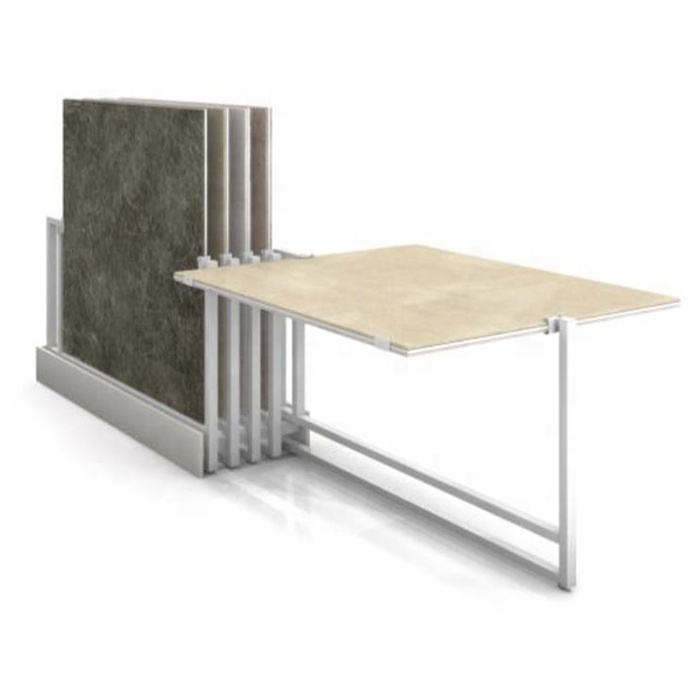
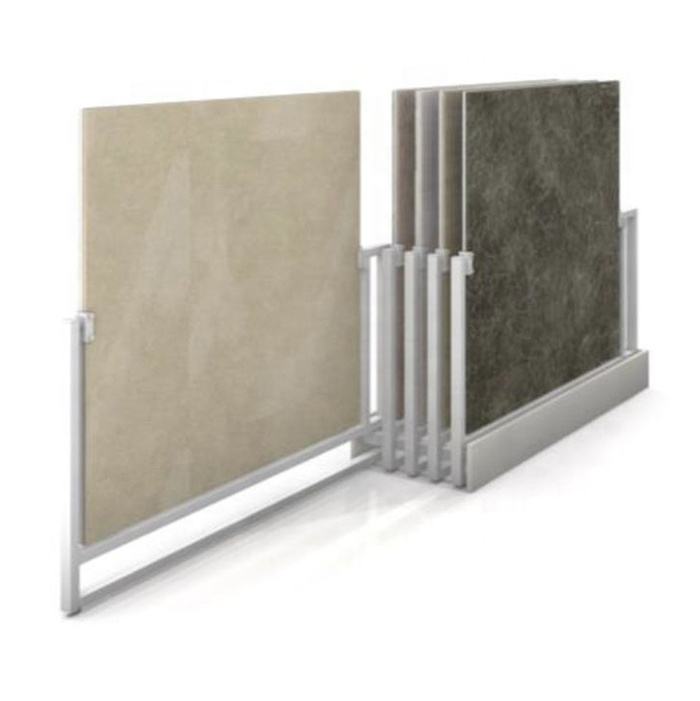
| Adjustable angled panels or flip panels | Present tiles at viewing-friendly angles and allow multi-panel comparison. |
| Modular, freestanding design | Move or reconfigure displays to suit promotions, seasonal changes, or new collections. |
| Smooth slide or flip mechanisms | Minimize tile chipping and enhance the customer experience when handling samples. |
| Branding panels and header signage | Reinforce premium lines and help guide visitors through collections. |
Merchandising strategies that convert
Group by use-case: Separate floor tiles, wall tiles, and backsplash tiles so customers focused on a single application can find relevant options quickly.
Organize by visual family: Arrange by color temperature (light → medium → dark), then by texture and pattern intensity.
Create curated zones: Feature “best sellers,” “new arrivals,” and “eco-friendly” sections to guide customers toward decisions.
Limit active choices: Displaying 10–15 visible options per decision point reduces overwhelm and improves conversion.
Use lighting to reveal finish: Accent lighting or side LED strips highlight gloss levels and surface details.
Practical layout examples for different showroom sizes
Boutique tile gallery: One central freestanding ceramic tile display rack with angled panels and a small sampling table where customers can view tiles with grout samples.
Large multi-brand showroom: Multiple modular tile showroom display stands arranged into category aisles; feature island displays for premium collections.
Trade counter or installer shop: Compact bulk tile display stands near the counter for quick reference and rapid order qualification.
OEM customization and flexible MOQ — what to request
For B2B buyers who want a tailored fixture, OEM capability is critical. Ask your supplier about:
Custom panel sizes to fit your most common tile formats (e.g., 30×60, 60×60, plank sizes).
Surface finishes and powder-coating colors that match your showroom aesthetic.
Logo panels, header signage, and built-in product labeling channels.
Modular systems that allow easy future expansion.
Note: suppliers commonly offer flexible MOQ arrangements to accommodate both single-store pilots and wider rollouts; discuss scale and delivery options when requesting a quote.
Maintenance and safety guidance
Install anti-tip brackets for tall freestanding racks.
Use felt or rubber pads on shelves to protect tile edges.
Schedule monthly checks of connectors and sliding mechanisms.
Clean metal and powder-coated surfaces with mild, non-abrasive cleaners.
Buyer checklist — information to include in your enquiry
Typical tile formats and maximum sample dimensions.
How many visible samples you want per fixture face.
Preferred display style (flip panels, angled panels, slide-out).
Branding requirements and signage specs.
Whether the unit should be freestanding or anchored.
Estimated rollout scope (single store vs. multi-store).
Providing these details yields faster, more accurate drawings and a tailored proposal.
FAQs
Q: Can these fixtures display large-format tiles safely?
A: Yes. Choose racks engineered for heavy loads with reinforced supports and secure paneling.
Q: Will customization delay delivery?
A: Custom OEM requests typically require additional lead time; share your schedule early so the supplier can align production and shipping.
Q: Do suppliers accept small pilot runs?
A: Many factories support flexible MOQ to help retailers test new displays before committing to larger rollouts.
Position your showroom for growth
A thoughtfully selected ceramic tile display rack for retail stores is a strategic asset. It optimizes shopper engagement, reduces product wear, and strengthens brand perception. By prioritizing heavy-duty construction, modularity, and OEM customization, tile showroom owners can create a merchandising environment that supports both selling and storytelling. Prepare your buyer checklist, prioritize the display features that matter most to your customers, and request custom renderings to visualize the impact—these steps will make your showroom more compelling and drive more qualified enquiries.